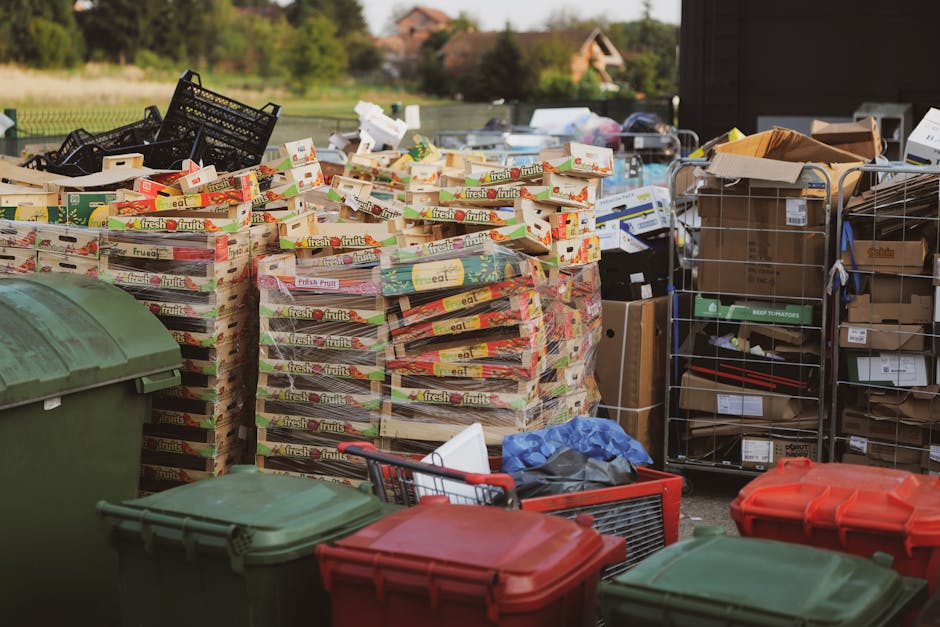
North West London council rules bulky rubbish collection fines: what residents need to know before putting bulky waste out
If you have a sofa on the pavement, an old mattress leaning by the bins, or a pile of broken furniture waiting for "later", the rules can get tricky fast. North West London council rules bulky rubbish collection fines are not just a dry bit of local bureaucracy; they can affect your wallet, your neighbours, and whether your waste disappears legally or ends up causing a problem for everyone. Truth be told, most people only think about bulky waste when the thing is already in the hallway and blocking the way out.
This guide explains how bulky rubbish collection usually works in North West London, why councils issue fines, what residents and landlords should watch for, and the safer ways to stay compliant. You will also find a practical step-by-step plan, common mistakes, and a checklist you can actually use. No fluff. Just the stuff that helps.
For anyone dealing with household clutter, tenancy move-outs, garden debris, or office clear-outs, it may also help to understand the broader service options such as rubbish collection, rubbish removal, and waste disposal. Those services often sit right alongside bulky item removal decisions.
- Why the rules matter
- How bulky rubbish collection and fines work
- Key benefits and practical advantages
- Who this is for
- Step-by-step guidance
- Expert tips
- Common mistakes to avoid
- Tools, resources and recommendations
- Law, compliance and best practice
- Options and comparison
- Real-world example
- Practical checklist
- Conclusion
- Frequently asked questions
Why North West London council rules bulky rubbish collection fines Matters
Bulky waste rules matter because they sit at the point where convenience meets public responsibility. A single armchair left outside at the wrong time can become a trip hazard, attract fly-tippers, or be treated as illegal dumping if it is not presented correctly. Councils in North West London, like councils across London, are balancing clean streets, limited collection capacity, and the cost of dealing with waste that should never have been left out in the first place.
And yes, the fine is the obvious worry. But the larger issue is that improper disposal often creates a chain reaction: missed collections, complaints from neighbours, possible enforcement action, and the hassle of arranging removal all over again. Nobody wants to come home to a warning sticker on the front door or a note from the management company. Not a fun morning.
There is also a practical side. If you understand the rules, you can choose the right route for your items instead of guessing. A proper pickup, a licensed removal option, or a more suitable clearance service can save time and sometimes money, especially when you are dealing with multiple bulky items or a mixed load after a move. For larger household clear-outs, house clearance and home clearance are often more sensible than trying to stagger everything through a council system built for smaller volumes.
Key point: The rule is not simply "can I get rid of this item?" It is "how do I get rid of it without creating a nuisance, breach, or avoidable fine?" That change in mindset makes all the difference.
How North West London council rules bulky rubbish collection fines Works
Bulky waste collection usually sits under local council or authorised collection services, and the exact process can differ by borough. That means the safest approach is to assume the council has its own booking rules, placement instructions, item restrictions, and timing windows. If those instructions are ignored, enforcement teams may treat the waste as unlawfully deposited on the street or left out for collection in the wrong way.
In plain English, the process usually works like this:
- You identify the items that count as bulky rubbish.
- You check whether they are accepted by the council or whether a private removal route is more suitable.
- You book a collection or arrange disposal through an approved method.
- You place items only where and when instructed.
- You keep records or confirmation in case there is a dispute.
The fine risk generally appears when one of those steps breaks down. For example, a sofa left outside too early may be seen as abandoned waste. A fridge placed next to a communal bin store without permission can be a problem too, especially in flats where there is shared access and a lot of foot traffic.
In mixed-use buildings and managed blocks, this becomes even more sensitive. Residents may assume a caretaker, letting agent, or building manager will "sort it out", but if the waste is not handled in line with the site rules, the responsibility can still sit with the person who left it there. If you are in a flat, a dedicated flat clearance service may be a cleaner fit than trying to squeeze bulky items into communal areas.
Sometimes people ask: "But it was only there for a few hours, does that really matter?" Often, yes. Councils and enforcement officers look at placement, nuisance, timing, and whether the item has been left in a way that looks abandoned. A bit of common sense goes a long way. So does reading the instructions properly, which, let's face it, most of us only do after something has already gone wrong.
Key Benefits and Practical Advantages
Staying on top of bulky waste rules is not just about avoiding fines. There are a few real-world advantages that matter in North West London, where space is tight and streets can get cluttered quickly.
- Less risk of enforcement action: If items are collected or disposed of correctly, you reduce the chance of a penalty notice or follow-up complaint.
- Better neighbour relations: No one enjoys staring at a broken sofa for three days in a shared courtyard.
- Faster property turnover: For landlords, agents, and sellers, quick and compliant clearance keeps a move on schedule.
- Cleaner communal spaces: Hallways, forecourts, garages, and bin stores stay usable.
- Better sorting of reusable items: If furniture is in good condition, it may be better handled through a targeted service such as furniture disposal or even a separate collection plan.
There is a quieter benefit too: peace of mind. Once the waste is dealt with properly, you stop worrying about whether someone will report it or whether a notice will appear. Small thing, maybe, but genuinely worth it.
For business settings, the same logic applies. Offices and shops often generate bulky waste during refurbishments or downsizing. In those cases, office clearance and business waste options can be more appropriate than a one-off household approach.
Who This Is For and When It Makes Sense
This topic matters to more people than you might first think. The obvious group is homeowners with bulky furniture, but that is only the start.
- Tenants: Especially those moving out and needing to clear beds, wardrobes, mattresses, and loose junk quickly.
- Landlords and agents: Vacant properties often need fast, tidy clearance between tenancies.
- Flat owners and residents: Shared entrances and bin areas create extra risk if items are left incorrectly.
- Families downsizing: When a house feels overfull, bulky waste decisions multiply quickly.
- Small businesses: Especially those replacing furniture or clearing stockrooms.
- DIY renovators: Builders' waste and old fittings can accidentally spill into the "bulky waste" category if not planned properly.
It also makes sense when you are dealing with a one-off awkward item rather than a full-scale renovation. A sofa, fridge, broken wardrobe, shed contents, or garage clutter can all create the same basic question: can the council handle this, or do I need a more flexible option?
If the waste is a mix of household bits and heavier items, a broader waste clearance approach is often easier to manage. For garages, you may also want to look at garage clearance, which is surprisingly handy when a "quick tidy" turns into three bin bags, a broken bike, and an old chest of drawers. Happens all the time.
Step-by-Step Guidance
Here is a practical way to deal with bulky rubbish without drifting into fine territory. Keep it simple.
1. Identify exactly what needs to go
Make a proper list. One person's "junk" can include recyclable material, electricals, reusable furniture, and general waste all in one pile. Group items before moving them. That makes the rest easier and helps avoid accidental non-compliance.
2. Check the item type and condition
Some items are straightforward, while others need special handling. A sofa is not the same as rubble, and a wardrobe is not the same as paint tins. If the item is reusable, a more selective route may be better. If it is damaged or contaminated, disposal becomes more important than reuse.
3. Decide whether council collection is realistic
For a single item or a small number of bulky objects, a council route may be suitable. But if you have a houseful of items, awkward access, or a tight deadline, a private clearance option may be easier. This is especially true if the waste is tied to moving out, decorating, or clearing a long-neglected room.
4. Follow the placement instructions exactly
This part is where many people go wrong. Keep the item where instructed, place it at the correct time, and do not leave it early "just to be safe". Early placement can be interpreted as fly-tipping or abandoned waste. A bit harsh? Maybe. Still the reality.
5. Keep proof of booking or arrangement
Save your confirmation, screenshots, or emails. If there is a misunderstanding, you will want evidence that you arranged disposal properly and followed the process.
6. If in doubt, choose a more suitable clearance route
When the load is too large or too mixed, it is usually better to use a targeted removal service than to gamble on a council system. Services like rubbish clearance and waste removal can be better matched to the job, especially where access, timing, or item variety is an issue.
Expert Tips for Better Results
After enough clearances, a few patterns become obvious. The people who avoid trouble do a few small things consistently.
- Separate bulky items from general waste early. It sounds obvious, but mixed piles are where things get messy.
- Measure large items before moving them. A wardrobe that barely fits through the door can become a doorway drama.
- Take photos before disposal. Useful for landlord records, insurance questions, or confirming what was removed.
- Check shared building rules first. Communal blocks can have stricter expectations than a house with a private front path.
- Plan for awkward items like sofas and mattresses. They are bulky, cumbersome, and oddly good at causing friction in narrow hallways.
A little planning saves a lot of heavy lifting. And a lot of swearing, if we are being honest.
If your bulky items are a sofa or armchair, sofa removal is worth considering because those items are awkward to move and very easy to leave out badly. Likewise, if you are clearing a specific room rather than the whole property, a narrower service can be more efficient than a catch-all solution.
One practical observation from real-life jobs: people often underestimate access. Stairs, tight corners, and parking restrictions can turn a "small job" into a carefully managed one. That is not a reason to panic. Just a reason to plan before lifting.
Common Mistakes to Avoid
The fines issue usually comes down to a handful of avoidable mistakes. Here are the big ones.
- Leaving items out too early: This is probably the most common mistake and the easiest to avoid.
- Using the wrong service for the waste type: Builders' debris, household furniture, garden cuttings, and business waste are not all the same thing.
- Blocking shared access routes: Hallways, fire exits, and bin stores should never become temporary storage areas.
- Assuming someone else will deal with it: A landlord, porter, or neighbour may help, but responsibility is not always transferred just because someone is nearby.
- Mixing reusable items with contaminated waste: Once that happens, the item often stops being suitable for donation or resale.
- Ignoring local instructions in a hurry: Rushing a move-out is when people make the expensive mistakes.
Builders and renovators should be especially careful with mixed loads. Construction offcuts and household bulky waste can look similar in the back of a van, but the disposal rules can be different. If you are clearing post-renovation debris, builders waste should be treated as its own category, not bundled in carelessly with furniture and general rubbish.
For garden overhauls, the same applies. Branches, soil, old pots, and broken fencing belong in a planned route. That is where garden clearance becomes useful, particularly after a weekend of pruning that somehow turned into a pile the size of a small hedge.
Tools, Resources and Recommendations
You do not need fancy tools to manage bulky waste well, but a few basic items and habits help a lot.
- Tape measure: Useful for checking item dimensions and access routes.
- Strong sacks or boxes: Handy for smaller pieces removed alongside bulky items.
- Marker pen or labels: Great for separating keep, donate, and dispose piles.
- Phone camera: Simple, but very useful for records before and after clearance.
- Booking confirmation folder: Keep disposal notes together so nothing gets lost when the day gets busy.
For households with many rooms or a backlog of clutter, a full house clearance or home clearance plan is often the cleanest way to reset the space. If the job is more office-led, office clearance can reduce disruption and keep the workspace usable while the removal happens.
Practical recommendation: if the item is heavy, awkward, or part of a mixed load, do not leave the decision until the last minute. A slightly more structured disposal plan usually beats a rushed one. Every time.
Law, Compliance, Standards, or Best Practice
When discussing fines and bulky rubbish, the key thing is to stay grounded in cautious, practical best practice. Different North West London boroughs may have different booking systems, presentation rules, and enforcement approaches, so it is sensible to treat local instructions as the controlling guide for your area.
From a compliance perspective, the safest principles are straightforward:
- Do not leave waste where it creates a nuisance or obstruction.
- Do not assume a communal area is available for temporary storage.
- Do not place items out before the approved time window.
- Do not mix regulated or awkward waste types without checking suitability.
- Do keep clear evidence of any collection or removal arrangement.
For businesses, this becomes even more important because waste duty of care is a serious operational issue. Businesses should be more deliberate about segregation, record keeping, and choosing an appropriate disposal route. If your premises are generating regular waste, a dedicated business waste arrangement is usually more suitable than treating everything as one-off domestic rubbish.
One useful standard of judgment is simple: if the disposal method would look untidy, uncertain, or hard to explain to a council officer, it probably needs improving. That is not a legal test, just sensible practice. And honestly, it keeps life calmer.
Options, Methods, or Comparison Table
If you are choosing how to deal with bulky rubbish in North West London, the best method depends on volume, urgency, access, and the type of item. Here is a practical comparison.
| Option | Best for | Pros | Watch-outs |
|---|---|---|---|
| Council bulky waste collection | Single items or small, straightforward loads | Convenient for eligible items; familiar process | Timing rules, item limits, and strict placement requirements |
| Private rubbish removal | Mixed loads, awkward items, urgent clear-outs | Flexible timing; handles more variety; less waiting | Needs careful provider selection and clear item list |
| House or home clearance | Whole-property or large-room clear-outs | Efficient for bigger jobs; less disruption overall | Can be more than you need for one item |
| Furniture-specific disposal | Sofas, wardrobes, tables, bed frames | Good for heavy household items; simple scope | Not ideal if the load also includes general waste |
| Garden or builders clearance | Outdoor waste or renovation debris | Better suited to waste type; safer sorting | Needs correct separation from household items |
The table above is the real decision-making point. If you are dealing with one item and have time, the council route may be fine. If you are staring at a van-load of mixed clutter, then a broader service is usually the calmer choice. No drama, fewer surprises.
Case Study or Real-World Example
Imagine a North West London flat where a tenant is moving out on a Friday, the lift is small, and there is a sofa, a mattress, a broken desk, and a bag of random extras sitting in the living room. The council collection slot available is several days away. The landlord wants the place ready for cleaning over the weekend. The hallway is shared, so nothing can be left outside casually.
If the tenant simply places the sofa near the entrance, the risk is obvious: the building might treat it as dumped waste, neighbours may complain, and the item could be left in the way long enough to attract a fine or removal notice. That is the kind of situation that becomes stressful very quickly.
A better route would be to separate the load, identify the items properly, and arrange a suitable clearance service that can remove everything in one go. For mixed household items, something like waste clearance or waste collection can be easier than trying to stage items for multiple collections. If the sofa is the most difficult piece, targeted sofa removal takes the pressure off the rest of the move.
The difference is not just speed. It is control. The flat gets cleared, the building stays tidy, and nobody is crossing their fingers hoping the item disappears by magic. Spoiler: it usually doesn't.
Practical Checklist
Use this quick checklist before you put anything out for bulky rubbish collection or book a removal.
- Have I identified every bulky item clearly?
- Do I know whether the item is accepted by the council route or needs private removal?
- Have I checked the placement and timing instructions carefully?
- Is the item in a safe, approved location?
- Have I kept proof of booking or arrangement?
- Have I separated reusable, recyclable, and general waste where possible?
- Have I checked building rules, landlord instructions, or communal area restrictions?
- Is there enough space to move the item without causing damage?
- Do I need a more suitable service for furniture, garden waste, or builders' debris?
- Would a wider clearance option save time and reduce risk?
If you can tick most of those off, you are usually in a good place. If not, pause and plan a little more. That tiny pause can save a proper headache later.
Conclusion
North West London council rules bulky rubbish collection fines are ultimately about preventing avoidable mess, inconvenience, and misuse of shared spaces. Once you understand the basic logic, the whole thing becomes much simpler: identify the item, follow the correct route, respect the timing and placement rules, and choose a better-fit clearance method when the load is too awkward for a standard collection.
That approach helps residents, landlords, tenants, and businesses stay organised while reducing the chance of penalties. It also makes the job feel less like a stressful chore and more like a manageable task. Which is what most people want, really. Just get it done properly and move on with the day.
If you are dealing with bulky items, mixed waste, or a time-sensitive clear-out, it is often worth comparing your options before you drag anything to the kerb. The right plan now usually saves a much bigger problem later. And that is rarely a bad trade.
Get a free quote today and see how much you can save.
Sometimes the calmest choice is the one that clears the space, protects the property, and lets everyone breathe a little easier.
Frequently Asked Questions
What counts as bulky rubbish in North West London?
Bulky rubbish usually means large household items that do not fit in a standard bin, such as sofas, beds, wardrobes, mattresses, tables, or white goods. The exact acceptance rules can vary by borough, so it is worth checking how your local council classifies the item before you put it out.
Can I leave bulky items outside my property before collection day?
Usually, no. Leaving items out too early can create a nuisance and may be treated as abandoned waste. The safest approach is to follow the exact timing instructions for your collection or removal arrangement.
Why would a council fine me for bulky waste?
A fine may follow if items are dumped, left in the wrong place, placed out too early, or not disposed of according to local rules. In shared buildings, placing items in hallways or communal areas can also trigger complaints or enforcement action.
Are bulky waste fines the same across all North West London councils?
No, the rules and enforcement approach can differ from one borough to another. That is why it is risky to assume one council's process applies everywhere. Always check the specific local instructions for your address.
What should I do if I have several large items, not just one?
If you have multiple bulky items, a broader removal option may be more practical than a standard council collection. Services such as house clearance or rubbish removal are often better suited to mixed or larger loads.
Is a sofa treated differently from other bulky waste?
Often, yes, because sofas are awkward, heavy, and sometimes require a more specific collection method. Sofa removal is a sensible option when you need a simple, direct solution for one or more upholstered items.
What if I live in a flat with a communal bin area?
You should be extra careful. Shared hallways, bin stores, and entrances can have strict rules, and items left there may be treated as a building issue or an enforcement problem. Flat clearance can help when the item needs to come out of a managed or shared property.
Can I mix garden waste with bulky rubbish?
It is better not to mix waste types unless you know the service accepts them together. Garden clearance is usually handled separately from household bulky waste, especially when items include soil, branches, fencing, or heavy green waste.
What records should I keep when arranging disposal?
Keep booking confirmations, emails, messages, photos of the items, and any notes about collection instructions. If there is a dispute, that record can make things much easier to resolve.
Is private rubbish removal better than council collection?
Not always, but it can be better if you have mixed waste, a tight deadline, awkward access, or several bulky items. It comes down to convenience, fit, and how much risk you want to avoid.
What is the safest approach if I am unsure about the rules?
Use the most conservative option: identify the waste type clearly, avoid leaving items out early, and choose a removal route that matches the load. If the job feels too awkward, a wider waste clearance or furniture disposal option is usually safer than guessing.
Can landlords be affected by bulky rubbish fines too?
Yes, especially where tenants leave items in shared spaces or at the end of a tenancy. Landlords and agents should have a clear process for clearance so properties are not left in a messy or non-compliant state.