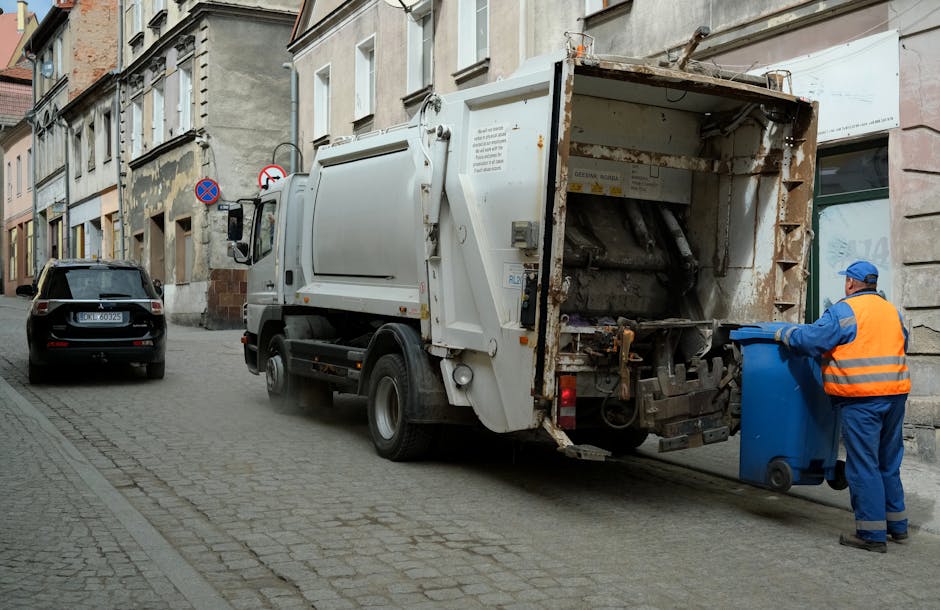
Avoid hidden rubbish removal charges in Brent council areas
If you have ever booked a rubbish collection and then spotted extra fees creeping in after the job, you will know how frustrating it feels. In Brent council areas, that annoyance can turn into a real budget problem very quickly. The good news is that most hidden rubbish removal charges can be avoided if you know what to look for, what to ask, and where the usual traps are. This guide breaks everything down in plain English, so you can compare quotes properly, spot unfair add-ons early, and choose a service with confidence.
Whether you are clearing a flat in Kilburn, tidying a garage in Wembley, or dealing with bulky waste after a house move, the same basic rule applies: clarity first. Let's face it, nobody enjoys reading the small print after a van has already turned up outside.
Contents
- Why avoiding hidden rubbish removal charges in Brent council areas matters
- How rubbish removal pricing usually works
- Key benefits and practical advantages
- Who this is for and when it makes sense
- Step-by-step guidance
- Expert tips for better results
- Common mistakes to avoid
- Tools, resources and recommendations
- Law, compliance, standards and best practice
- Options, methods and comparison table
- Case study or real-world example
- Practical checklist
- Conclusion
- Frequently asked questions
Why Avoid hidden rubbish removal charges in Brent council areas Matters
Hidden charges are not just a nuisance. They can change the whole decision-making process. A quote that looks cheap at first glance can become expensive once the provider adds waiting time, labour, heavy item fees, parking complications, stair charges, congestion-related delays, or disposal extras. In boroughs like Brent, where parking can be tight and access can be awkward, those add-ons can appear fast if the company has not quoted properly.
The reason this matters so much is simple: rubbish removal is often booked under pressure. You may be moving out, clearing a property after a tenancy, making space for builders, or just trying to get your home back under control. When people are rushed, they are easier to upsell. Not always deliberately, to be fair, but often because the quote was never detailed enough in the first place.
There is also a trust issue. A clear, all-in price tells you the company understands the job and has thought through access, volume, and disposal. A vague price can mean you are taking the risk instead of the provider. That is not a great position to be in.
For many households and businesses, the goal is not the absolute cheapest price. It is a predictable price. Predictable means you can plan, compare, and avoid awkward surprises when the van is already parked outside. That alone is worth a lot.
How Avoid hidden rubbish removal charges in Brent council areas Works
The easiest way to think about rubbish removal pricing is that it usually has three parts: the waste itself, the labour needed to remove it, and the practical challenges of getting it from your property to the vehicle and then to disposal. Most hidden charges come from one of those three areas being underexplained.
For example, a provider might quote for a "single load" without saying what that means in cubic yards, bin bags, or van space. Another company may quote for collection but not mention that extra labour is added if items need carrying down several flights of stairs. One more common one: the initial price only covers light mixed waste, and then heavier materials or awkward furniture are priced separately.
In Brent council areas, access can be a big factor. Think narrow roads, controlled parking zones, busy high streets, estate access restrictions, and flats with stair-only entry. If a company has not asked about these details, it may be planning to add them later. You can usually tell. The quote feels a bit too neat, almost suspiciously neat.
A transparent rubbish removal process should normally include:
- a description of the waste type
- an estimate of volume or load size
- any labour involved in loading
- collection conditions, such as stairs or limited access
- disposal or recycling handling
- extras that are clearly identified before the job starts
If you need broader support for mixed waste or general clearance work, it can help to compare services like rubbish removal, rubbish clearance, and waste removal to see how each provider describes scope and pricing.
Key Benefits and Practical Advantages
When you avoid hidden fees, you do more than save money. You also make the whole clearance process less stressful. That sounds obvious, but in real life it changes how smoothly the job runs.
- Better cost control: You can budget with fewer surprises.
- Cleaner comparisons: Quotes become easier to compare like for like.
- Less stress on collection day: No awkward haggling at the doorstep.
- Fewer disputes: Everyone knows what is included before work begins.
- Faster decisions: Clear pricing means less back and forth.
- Better service match: The right company for a flat clearance is not always the right company for builders waste.
There is another practical advantage people miss: transparency often reflects experience. A provider that asks sensible questions early is usually thinking ahead about access, weight, disposal and labour. That tends to lead to smoother jobs. Not perfect every time, obviously, but better.
If you are comparing options for bulk items, specialist furniture, or property clearances, relevant service pages such as furniture disposal, sofa removal, and house clearance can help you understand how the work is framed and what type of collection you actually need.
Who This Is For and When It Makes Sense
This advice is useful for almost anyone arranging waste collection in Brent, but a few groups benefit most.
Homeowners and renters
If you are clearing out a loft, replacing furniture, or moving home, the final pile often looks smaller than it is. That is where hidden charges sneak in. A couple of wardrobes, a broken bed, and a stack of bags can suddenly turn into "more than expected." Sound familiar?
Landlords and letting agents
Tenancy end clearances often involve mixed items, cleaning pressure, and short deadlines. You need a quote that stays fixed if access is awkward or if the property includes bulky pieces.
Businesses and offices
Office clearances and business waste jobs often involve desks, chairs, file storage, packaging, and mixed recyclables. A vague commercial quote can miss labour, lift access, or out-of-hours work. For that type of work, it is worth reviewing business waste and office clearance to understand the service fit.
Tradespeople and renovators
Builders waste is a classic area for pricing confusion because rubble, timber, plasterboard, and mixed construction debris can all be treated differently. If a quote is too broad, the price often grows later. A service such as builders waste can be more suitable when the load is construction-related.
People clearing awkward spaces
Garages, gardens, and flats often need more carrying and sorting than people expect. If a job involves multiple trips, stair carrying, or tight access, make sure that is discussed from the start. If not, the quote can wobble. A bit.
Step-by-Step Guidance
Here is a practical way to avoid hidden rubbish removal charges before you book.
- Describe the waste properly. Don't just say "a bit of rubbish." Say what it is: bags, furniture, garden waste, broken appliances, or builders debris.
- Estimate the load clearly. Share photos, measurements, or a rough list. Visual information beats guesswork every time.
- Ask what the quote includes. Labour, loading, disposal, transport, VAT if applicable, and any parking-related costs should all be clear.
- Ask about access conditions. Stairs, long carries, basement entries, gated estates, and narrow roads should be discussed early.
- Check whether the quote is fixed or estimated. Fixed-price quotes give more certainty. Estimated quotes may change if the description is incomplete.
- Ask about special items. Mattresses, sofas, white goods, heavy rubble, and commercial items can be priced differently.
- Confirm the timing. Some companies charge more for same-day service, early starts, evenings, or weekend work.
- Get the agreement in writing. Even a simple written message helps avoid memory lapses later. We all remember things slightly differently, funny that.
A useful habit is to send one clear set of photos from different angles. In our experience, that often removes half the uncertainty straight away. One photo is rarely enough. Three or four tells the story better.
Expert Tips for Better Results
These are the small details that make a big difference.
Be specific about what stays and what goes
If you are only removing part of a room, clearly mark what should be left behind. It sounds simple, but this avoids mistakes and unnecessary labour.
Separate reusable items from true waste
Usable furniture, working appliances, or items you can donate elsewhere may affect how a provider prices the job. Some companies treat reusable items differently because they are easier to handle than broken mixed waste.
Watch for "starting from" pricing
A starting price is not the same as a final price. It may be perfectly legitimate, but only if it is explained properly. If not, it can become a trap.
Check loading assumptions
Some quotes assume waste will be stacked neatly at the kerb. Others include full loading from inside the property. That one difference can change the price a lot.
Use clear photos in daylight
Late-night mobile photos with shadowy corners are not ideal. A bright midday shot, or even early evening with decent light, gives a more accurate picture.
Ask one direct question
"What could make the price go up on the day?" That single question tends to reveal how honest the quote is. If the answer is vague, that tells you something too.
For larger clearances, you may also want to look at related services such as home clearance, flat clearance, or garage clearance depending on the type of space involved. Matching the service to the job is one of the easiest ways to keep costs sensible.
Common Mistakes to Avoid
Most surprise charges come from a small set of avoidable mistakes.
- Booking on price alone: The cheapest headline figure is rarely the safest choice.
- Under-describing the waste: "A few items" is not enough if there are heavy pieces or awkward access points.
- Assuming labour is included: Some companies quote for vehicle space only.
- Not asking about stairs or carrying distance: This is a classic trigger for extra charges.
- Ignoring parking realities: In Brent, parking can be the difference between a smooth pickup and a messy add-on.
- Forgetting special disposal rules: Some items need separate treatment, and that should be explained before collection day.
- Not checking the terms: It is boring, yes, but useful. Very useful.
One small but important point: if a company pressures you to book immediately without giving you time to compare or ask questions, pause. Good providers are usually happy to explain the quote. They do not need to act like a magic trick.
Tools, Resources and Recommendations
You do not need fancy software to avoid hidden rubbish removal charges. A few straightforward tools will do the job.
- Phone camera: Take clear photos of the waste, access route, and any awkward entry points.
- Simple room list: Write down what needs removing room by room.
- Measure tape: Useful for bulky items like wardrobes, sofas, or desks.
- Notes app: Keep a record of what each quote includes.
- Message history: Written confirmation is often the simplest safeguard.
As a practical recommendation, compare not just the price, but the wording. A careful quote usually names the waste type, explains access assumptions, and outlines what happens if the load changes. That is the sort of detail that saves headaches later.
If you want to explore broader collection and disposal options, the most relevant service pages are rubbish collection, waste collection, waste disposal, and waste clearance. They help you compare language and scope, which is surprisingly useful.
Law, Compliance, Standards and Best Practice
When rubbish is being removed in the UK, there are broader legal and environmental responsibilities around handling waste properly, using an appropriate carrier, and disposing of material responsibly. You do not need to become a legal expert to protect yourself, but it does help to know the basic standards of good practice.
In plain English, a professional waste service should be able to explain how your waste is handled, whether it is sorted for reuse or recycling where suitable, and whether any item requires separate treatment. For customers, the key point is simple: a low price is not much good if the work is not done properly or transparently.
Best practice usually includes:
- clear pre-collection descriptions of the waste
- honest access and labour assumptions
- no surprise charges added after work starts without agreement
- proper handling of bulky, heavy, or special items
- careful communication if the job changes on arrival
If you are dealing with commercial loads or regular disposal needs, you may want the provider to be especially clear on scope. That matters more than a flashy headline price. It just does.
It is also wise to review the provider's publicly stated policies and terms before confirming anything. If something is unclear there, ask for clarification. A decent company will answer plainly. If they do not, that is a useful warning sign.
Options, Methods, and Comparison Table
Not every clearance job needs the same approach. The right choice depends on volume, access, item type, and how quickly you need the space cleared. Below is a simple comparison of common options.
| Option | Best for | Possible risk of hidden charges | What to check |
|---|---|---|---|
| General rubbish removal | Mixed household waste, bags, and light household items | Medium | Labour, access, loading method, disposal included |
| Furniture disposal | Sofas, beds, wardrobes, desks | Medium to high | Item count, size, stair carrying, awkward dismantling |
| House clearance | Whole rooms, estates, move-outs, bereavement clearances | Medium | Volume estimate, exclusions, access and timings |
| Flat clearance | Upper-floor homes, smaller access routes | High if access is poor | Stairs, lift use, carrying distance, parking |
| Builders waste | Renovation debris and construction materials | High | Material type, weight, rubble handling, mixed load rules |
| Garden clearance | Cuttings, soil, branches, outdoor waste | Medium | Volume, wet weight, access through the property |
The table is not about finding the "best" service in the abstract. It is about matching the right method to the job so the pricing stays honest. That is the trick, really.
Case Study or Real-World Example
Imagine a tenant in Brent clearing a two-bedroom flat after moving out. There are two wardrobes, a mattress, several black bags, a broken coffee table, and a stack of packaging from a recent delivery. The first quote they receive looks cheap enough. But it says very little beyond "collection included."
They send a few photos and ask a few basic questions: Is labour included? Are stairs extra? Does the quote cover disposal? What if parking is tight outside the building? The second provider gives a clearer answer, explains the assumptions, and confirms the price in writing. It is slightly higher, but it does not move.
On collection day, the difference becomes obvious. The first provider might have added extra charges once they saw the stairs and the bulky wardrobe. The second one had already priced the job properly. The flat gets cleared, the hallway stops looking like a storage cupboard, and nobody has a difficult conversation at the door. That is the outcome you want.
Small jobs can produce the same lesson. A garage clearance in a quiet street may seem straightforward, then you discover the back gate is narrow and the waste has to be carried around a side return. Suddenly the "quick pickup" is not so quick. That is why honest description matters before anyone arrives.
Practical Checklist
Use this checklist before you confirm any rubbish removal booking in Brent.
- Have I described every item or type of waste clearly?
- Have I sent photos of the waste and access route?
- Do I know whether the price includes labour and loading?
- Have I asked about stairs, lifts, parking, and carrying distance?
- Is the quote fixed, or could it change on arrival?
- Have I asked about special items, heavy waste, or dismantling?
- Do I understand whether disposal is included?
- Have I compared more than one provider?
- Is the agreement confirmed in writing?
- Do the terms and service descriptions look clear and sensible?
Expert summary: The safest way to avoid hidden rubbish removal charges is to make the quote as specific as possible before collection day. Good photos, clear questions, and a written confirmation will prevent most surprises.
If you are still deciding which type of service suits your situation, it can help to look at specialist pages for garage clearance, garden clearance, or sofa removal. Matching the service to the waste is often the quickest win.
Conclusion
Avoiding hidden rubbish removal charges in Brent council areas is mostly about preparation, honesty, and asking the right questions before the van arrives. That sounds almost too simple, but it works. The more clearly you describe the waste, the access, and the conditions, the less room there is for surprise costs later.
In practical terms, you are looking for a provider that gives a clear price, explains what is included, and does not hide behind vague wording. When you find that level of clarity, the whole job becomes easier to manage. Less stress, fewer awkward moments, and a much better chance of getting the mess cleared without the bill drifting upward. A proper relief, frankly.
Get a free quote today and see how much you can save.
And if you are comparing options right now, trust your instincts as much as the numbers. Clear answers usually mean a smoother day, and sometimes that is worth more than shaving off a few pounds.
Frequently Asked Questions
What are hidden rubbish removal charges?
Hidden charges are extra fees that are not clearly explained before the job starts. They may include labour, stairs, access issues, heavy-item handling, parking, or disposal extras. The best way to avoid them is to get a clear written quote.
Why do rubbish removal prices change on the day?
Prices usually change when the waste was not described accurately, access is harder than expected, or the provider did not include everything in the original estimate. Photos and a clear item list reduce that risk.
How can I tell if a quote is fixed or estimated?
Ask directly whether the price is fixed once the waste description is agreed. If the provider keeps saying "starting from" or "depending on load," treat it as an estimate and ask what could change.
Are stairs and parking usually extra?
They can be, depending on the company and the property. In Brent council areas, parking and stair access are common reasons for extra charges, so it is wise to check before booking.
What should I send when asking for a rubbish removal quote?
Send clear photos, a list of items, approximate quantities, and any access details such as stairs, lifts, narrow hallways, or restricted parking. The more specific you are, the better the quote.
Is the cheapest quote usually the best choice?
Not always. A very cheap quote may leave out labour, disposal, or access factors. A slightly higher quote that is clear and fixed can be better value overall.
Do bulky items cost more to remove?
Often, yes. Sofas, wardrobes, beds, and large appliances may need extra labour or handling. That is why services like furniture disposal or sofa removal can be useful when you need a more accurate price.
Can I reduce rubbish removal costs myself?
Yes. Sort waste in advance, move items to an accessible point if safe to do so, separate reusable items, and give an accurate description from the start. Small bits of prep can make a real difference.
What if my waste is mixed, including builders debris and household items?
Mixed loads can cost more because different waste types may need different handling. Be upfront about the mix so the provider can quote properly. Builders waste is especially worth identifying clearly.
Should I get the quote in writing?
Absolutely. Written confirmation helps avoid disputes later. Even a simple email or message is useful because it records what was agreed, what was included, and what was not.
What is the safest way to compare two rubbish removal companies?
Compare what each quote includes, not just the headline price. Look at labour, loading, disposal, access conditions, and whether the price is fixed. Clarity matters more than a bargain-looking number.
When does it make sense to use a specialist clearance service?
If you are clearing a flat, house, garage, office, or garden, specialist services can give a better match to the job. That often means fewer surprises and more accurate pricing from the start.